A Photographer's Field Guide to the Marin Headlands
Few places offer the range of light and atmosphere that the Marin Headlands do. You can be standing in thick, swirling fog at sunrise and, 45 minutes later, watch that same fog burn off to reveal the Golden Gate Bridge and the San Francisco skyline glowing in the morning light. That magical window is why I keep going back, at least when I can be motivated to get up early.
This guide is built around how I actually shoot this location. The spots I go, the times I go, the glass I bring, and the moments I look for. I shoot Fujifilm X Series, and the kit I carry covers everything from telephoto compression to sweeping ultra-wide drama.
Early Morning & the Fog Hour (5:30–8:00am)
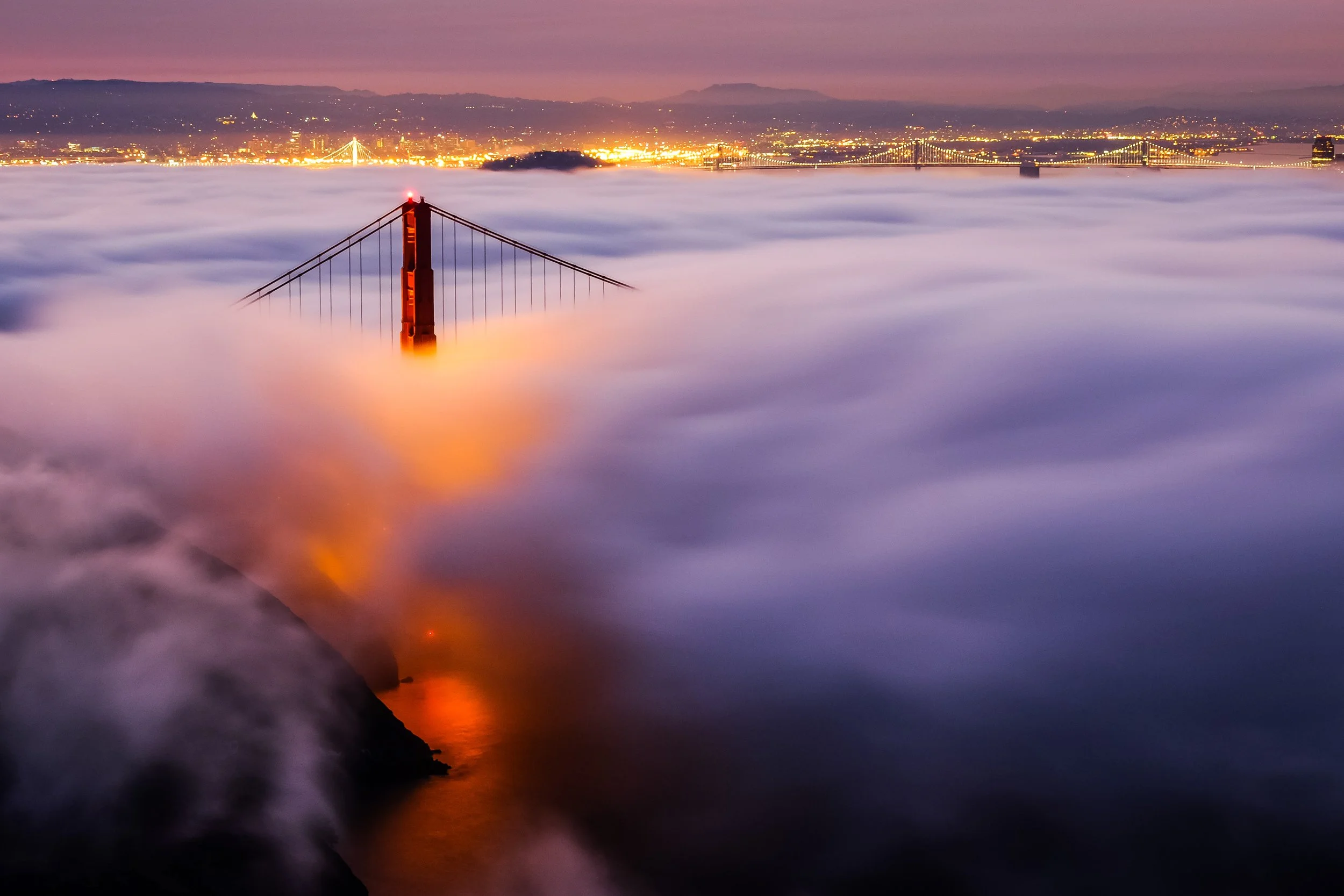
This is my favorite time to be up here, full stop. Arrive before first light. The drive over from the city through the tunnel still has that cold, quiet, alone feeling, and when you step out of the car at Hawk Hill or Battery Spencer, you're often standing in a layer of low marine fog with the tops of the Golden Gate towers poking up above it.
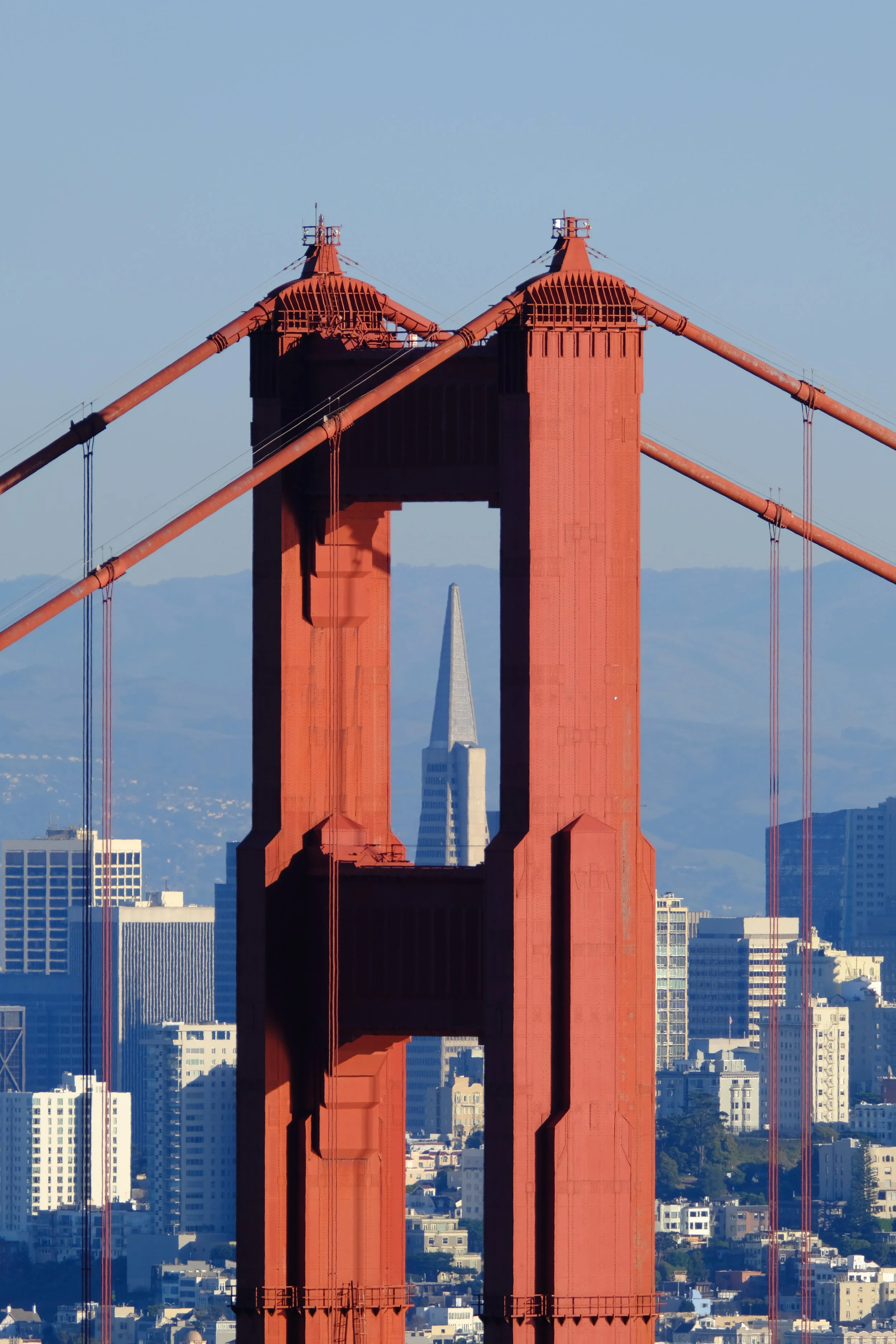
When the fog is low and dense, I want the longest glass I have. The XF 100-400mm f/4.5-5.6 mounted on my Fuji XT-5 is the weapon of choice here. Mounted on a tripod, I'm pulling the towers in close, compressing that space between the bridge and the Marin hills, isolating the fog tendrils between the cables. At 400mm you can fill the frame with the top of the south tower and still have fog texture wrapping around it.
If the fog is thinner or patchy, what I think of as a good compromise morning, the XF 70-300mm f/4-5.6 earns its place. It's noticeably lighter than the 100-400 and the zoom range still gives me plenty of reach to work the bridge and the city beyond. For those mornings when I want to hike a bit more and carry a little less, this is my go-to telephoto.
Sunrises over the East Bay hills are worth watching from up here too. When conditions are right, the hills go from dark silhouettes to this warm amber glow, with the bay reflecting the colors in between. The 70-300 handles these nicely.
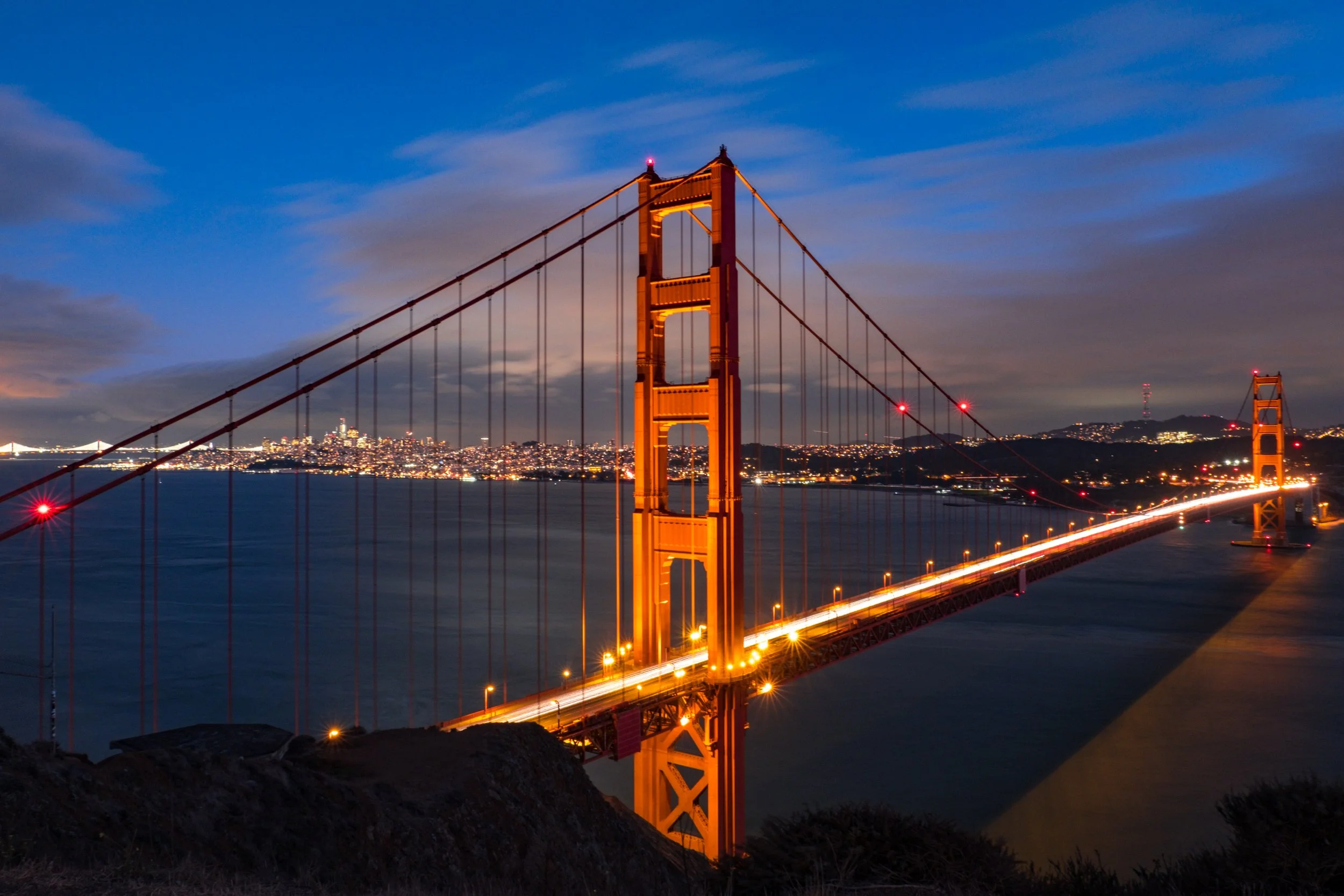
Sunset & Golden Hour (5:30–8:00pm)
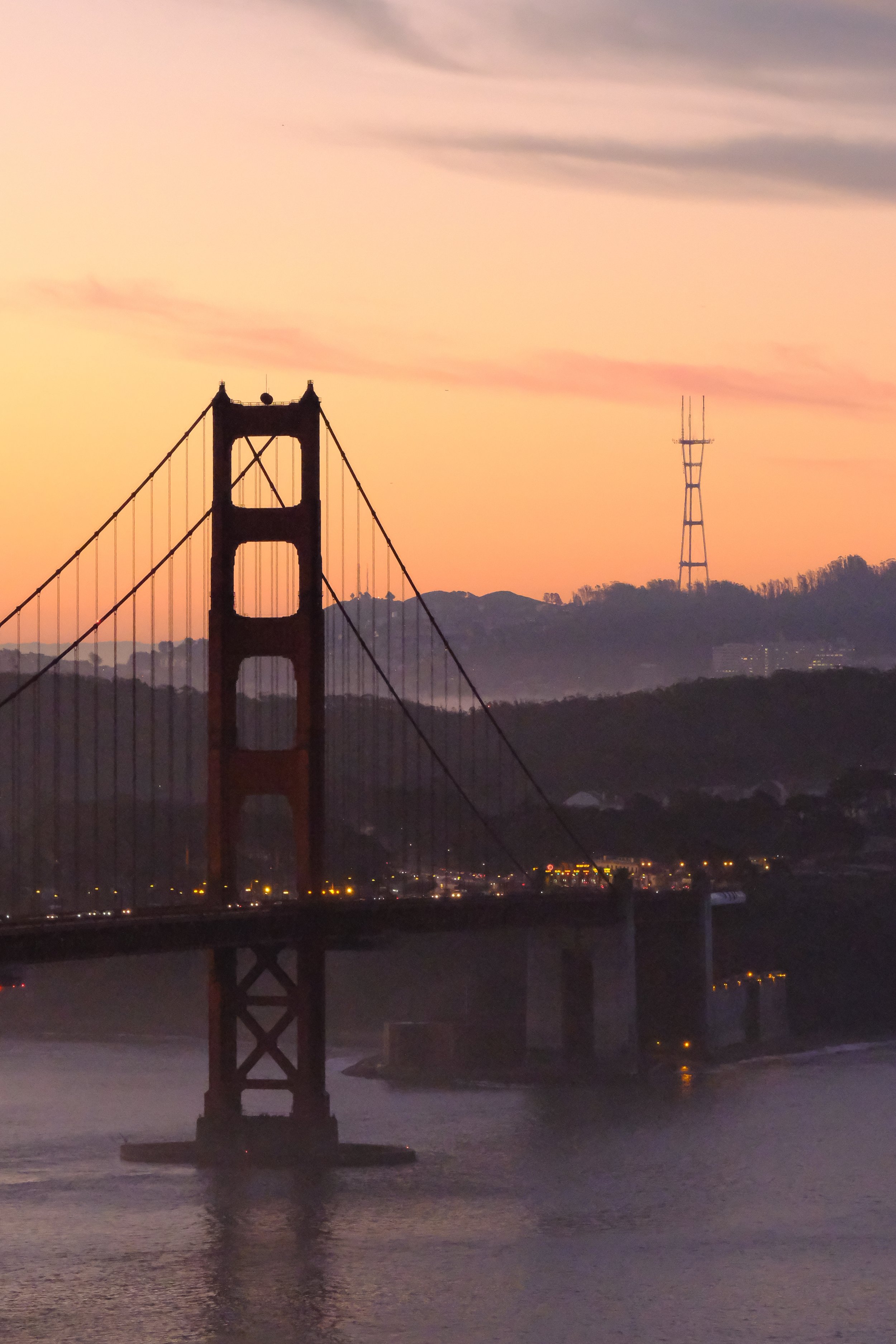
The evening light up here is something special. When the sun goes down over the Pacific, it throws warm orange and pink light directly onto the face of San Francisco. The city lights up. Every window facing west turns to gold. The bridge goes from grey to glowing red-orange. It doesn't last long, maybe 20 minutes of truly magic light and I want the right glass ready when it happens.
For those wide shots that take in the whole scene from bridge to city, bay in the middle, Headlands in the foreground, the XF 16-55mm f/2.8 is exactly what I reach for. That f/2.8 aperture is a perfect in the fading light. I can keep my ISO down and my shutter speed in check while the scene transitions from golden hour into blue hour. The 16mm end is wide enough to be dramatic without going full fisheye.
When I want something even more encompassing like those dramatic shots where I'm low to the ground with the Headlands wildflowers in the near foreground and the entire bay spreading out behind, the XF 10-24mm f/4 comes out. Ten millimeters on APS-C is genuinely wide. You feel the sky pressing down. These are the shots that remind you how big and dramatic this landscape really is.
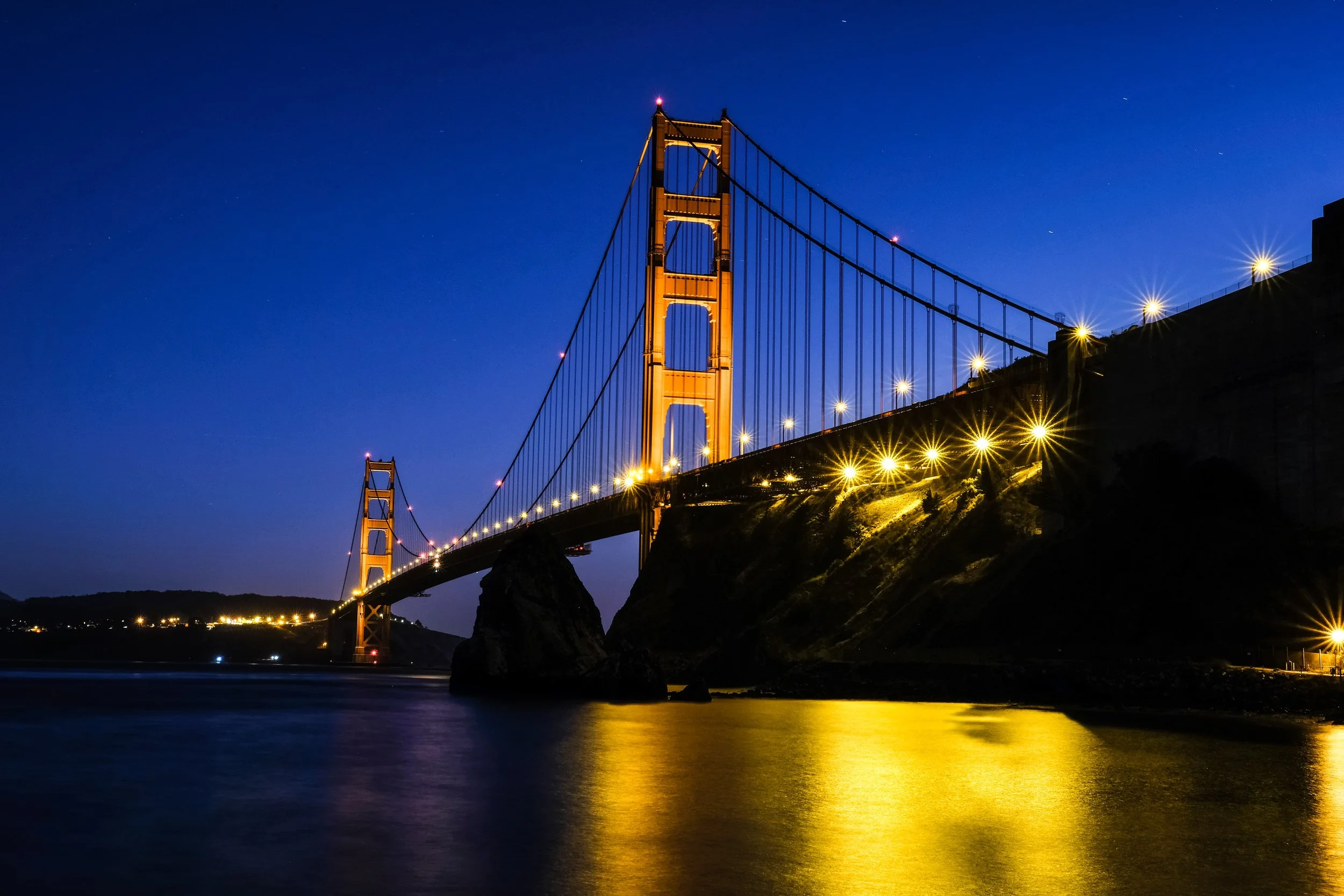
Stay for blue hour. After the sun is down, the city lights start to compete with the remaining sky color, and there's a 15-minute window where the balance between ambient sky and artificial city light is absolutely perfect. Tripod out, 16-55 or 10-24 wide open, and just work that scene until the sky goes fully dark. Even when it does go dark, that’s the time to do a little slow shutter photography and get those car light-streaks.
Fort Baker
Fort Baker sits at water level on the north side of the bridge, and it gives you the bridge from below rather than above. After your early morning shots up on the ridge, drop down here and you can still catch the tail end of golden hour from a completely different vantage point.
In the evening Fort Baker really shines for long exposure work. Set up your tripod, slow the shutter down, and you'll capture light streaks from the bridge traffic against a darkening sky. A zoom like the XF 16-55mm f/2.8 is ideal here, flexible enough to frame both wide establishing shots and tighter compositions of the towers.
Don't forget your tripod. It's non-negotiable for slow shutter work.
Things I've learned the hard way
Dress for the Headlands, not for the city. Have the puffer at the ready. The Headlands are consistently colder, windier, and wetter than San Francisco. In summer you can be in full fog in July while the city is perfectly reasonable. Layer up, always.
Conzelman Road is one way. Plan your stop order before you leave, because backtracking costs you fifteen minutes and the light won't wait.
Weekends are crowded. Like most places, sunsets can be the most challenging because every tourist and photographer wants to get the sunset shot. Early mornings aren’t a problem - just set the alarm early.
Wind moves tripods. Afternoons can be very breezy so make sure that tripod has some additional weight to keep it steady. I just use my backpack that has a few other lenses and camera bodies.
What I carry
Everything above comes off the same Fujifilm kit I use everywhere. The full rundown of bodies and glass is on my Fujifilm system page, but for the Headlands specifically:
XF 100-400mm f/4.5-5.6. Dense fog mornings from Hawk Hill. Compressing the towers, filling the frame at 400mm.
XF 70-300mm f/4-5.6. Patchy fog and East Bay sunrises. What I take when I want to hike a bit more and carry less.
XF 16-55mm f/2.8. Golden hour into blue hour, and Fort Baker long exposures.
XF 10-24mm f/4. Foreground-heavy wide shots, wildflowers and sky.
More Bay Area guides
If you're working the Golden Gate from the Marin side, the city side is worth a session too. My Treasure Island and Yerba Buena Island guide covers the Bay Bridge light trails and the straight-on skyline view, and the Alamo Square guide covers the Painted Ladies. Heading east instead, there's the Yosemite guide.
Take one home
A few of the frames from this guide are available as prints. The Golden Gate fog and blue hour images are in the print shop, available as metal, canvas, framed, acrylic, wood, and giclee.